
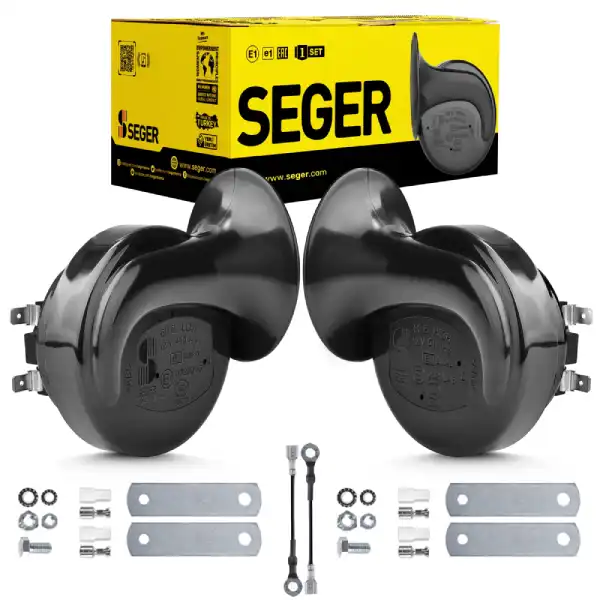
- Power Handling: Typically, electromagnetic horns can handle a range of power inputs. The power handling capacity may vary depending on the specific model and design.
- Frequency Response: Electromagnetic horns can produce sound across a specific frequency range. The exact range can vary but is usually optimized for specific applications, such as speech reinforcement or music playback.
- Sensitivity: Electromagnetic horns are often highly sensitive, meaning they can produce relatively high sound levels with relatively low input power. Sensitivity is usually measured in decibels (dB) and indicates how loud the horn can be at a given power level.
- Impedance: Like other types of speakers, electromagnetic horns have an impedance rating, typically measured in ohms (Ω). This rating is important for matching the horn to the amplifier or audio system.
- Construction: The construction of electromagnetic horns can vary, but they typically consist of a diaphragm or driver connected to an electromagnetic coil. The coil is driven by an electrical signal, which causes the diaphragm to vibrate and produce sound. The design and materials used can affect factors like durability, sound quality, and efficiency.
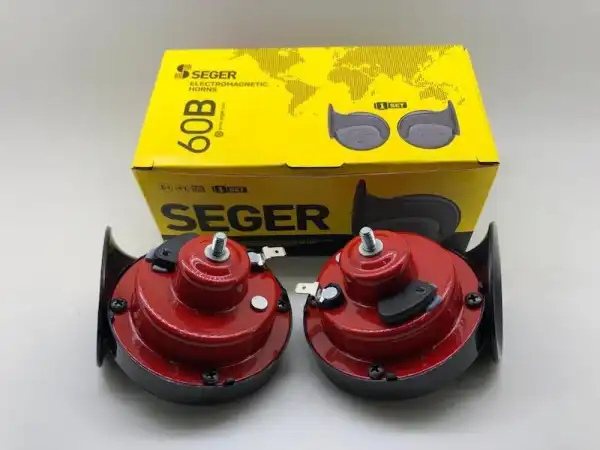
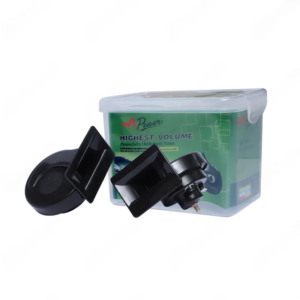
SEGER ELECTROMEGNATIC HORNS.
₨ 2,300
![MARUKO SUPER SPORTS HORN [LOUD WORLD]](https://eaglemotors.pk/wp-content/uploads/2024/05/image56B-300x300.webp "image56B")
Reviews
There are no reviews yet.