
- Power Output: Class AB amplifiers are known for their efficiency and power handling capabilities. A 5500 watts amplifier would typically have a high power output across its channels, suitable for driving multiple speakers or subwoofers in a car audio system.
- Channels: The “4 channel” specification indicates that the amplifier has four separate channels for connecting speakers. This allows for flexibility in configuring a multi-speaker audio system, such as front and rear speakers in a car.
- Class AB Design: Class AB amplifiers combine the efficiency of Class B amplifiers with the low distortion of Class A amplifiers. They are known for delivering high-quality sound with relatively low heat generation compared to Class A amplifiers.
- MOSFET Technology: MOSFET (Metal-Oxide-Semiconductor Field-Effect Transistor) technology is commonly used in high-power amplifiers due to its fast switching speed and high efficiency.
- Power Handling: The amplifier’s power handling capabilities indicate how much power it can safely deliver to connected speakers. This includes both continuous power handling (RMS) and peak power handling.
- Impedance Compatibility: Amplifiers are typically rated for specific impedance loads, such as 4 ohms or 2 ohms. It’s important to match the amplifier’s impedance rating with the impedance of the connected speakers for optimal performance.
- Input and Output Connections: The amplifier will have input terminals for connecting audio sources, such as a head unit or signal processor, as well as output terminals for connecting speakers.
- Frequency Response: The frequency response of the amplifier indicates the range of frequencies it can effectively reproduce. This ensures that the amplifier can accurately reproduce both bass frequencies and higher frequencies.
- Signal-to-Noise Ratio (SNR): The SNR measures the quality of the amplifier’s output signal compared to background noise. A higher SNR indicates cleaner sound output.
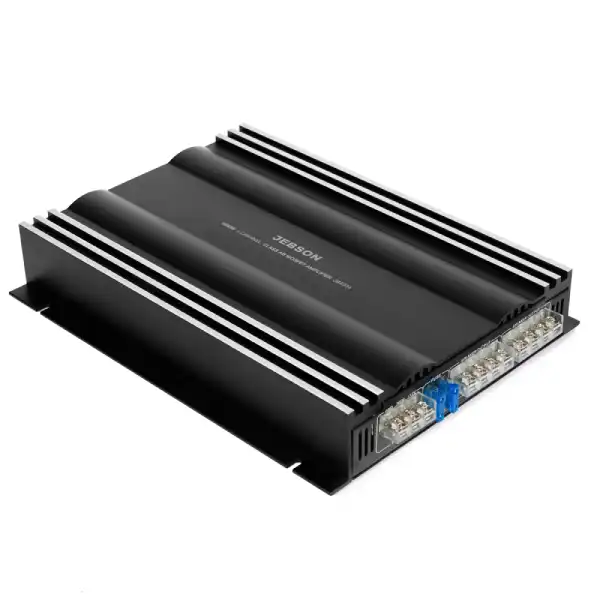
JEABSON 5500 WATTS CLASS AB MOFSET AMPLIFIER 4 CHANNEL.JB-4404
₨ 12,500




Reviews
There are no reviews yet.